
What is the best spa and salon management software?
The strongest options for US spa and salon businesses in 2026 are Vagaro, Boulevard, Zenoti, Mangomint, and Expressbook, each built for a different scale and priority. Fresha leads on price (free core plan), while Zenoti and Booker serve multi-location chains best. The right pick depends on your business size, integration needs, and how much you rely on analytics versus simplicity.
| Software | Best For | Key Features | Free Trial | Integrations | Support |
|---|---|---|---|---|---|
| SpaSalon Manager | Daily ops control | Inventory, sales tracking, scheduling | Available | Limited | Email/phone |
| Rosy Salon Software | Small/mid salons | Automated reminders, client management | Available | Calendar sync | Phone/email |
| Vagaro | Payment + marketing | POS, loyalty, online booking, marketing | 30 days | QuickBooks, Xero | Live chat/phone |
| Expressbook | Analytics + accessibility | AI analytics, voice agent, mobile app, QuickBooks/Xero sync | No subscription | QuickBooks, Xero, Google Calendar | Live support |
| Mangomint | Reporting focus | Clean UI, strong analytics, scheduling | Available | Calendar, POS | Chat/email |
| GlossGenius | Freelancers/mobile | Stylish UI, booking, payments | Available | Limited | Chat |
| Fresha | Budget-conscious | Zero monthly fee, scheduling, POS | Free plan | Limited | |
| Boulevard | Client retention | Loyalty programs, client engagement, sales | Available | Calendar, POS | Live chat/phone |
| Square Appointments | Small salons | Square POS integration, scheduling | Free tier | Square ecosystem | Chat/phone |
| Booker | Multi-location | Enterprise reporting, marketing, booking | Available | Broad | Phone/email |
| Zenoti | Enterprise/chains | Membership management, AI marketing, multi-location | Available | Broad | Dedicated support |
Automated appointment reminders via SMS and email reduce no-shows and improve client retention across all platforms that offer them. Integration with accounting tools like QuickBooks and Xero is now a baseline expectation, not a premium add-on.
How do these platforms compare on features that actually matter?
The real differentiators between salon management platforms are not the feature lists on their marketing pages. They show up in scheduling depth, POS flexibility, reporting quality, and how well the software connects to the tools you already use.
Appointment scheduling and client engagement

Rosy Salon Software handles scheduling with a clean, approachable interface built specifically for small and mid-sized salons. Its automated reminders via SMS and email are a genuine strength, reducing the manual follow-up burden on front desk staff. Boulevard goes further, pairing scheduling with loyalty programs and client engagement tools designed to drive repeat visits. Vagaro adds online booking with built-in marketing features, including email campaigns and a client-facing app, making it one of the more complete packages for salons that want to grow their client base without a separate marketing tool.
POS and payment processing
Square Appointments is the most direct choice for salons already using Square hardware. The scheduling and payment systems share a single backend, so reconciliation is straightforward. Fresha offers a zero-monthly-fee model with core POS included, which suits solo practitioners or very small teams. GlossGenius targets freelance stylists and mobile professionals with a polished interface and fast payment processing, though its integration options are narrower than Vagaro or Boulevard.
Reporting, analytics, and integrations
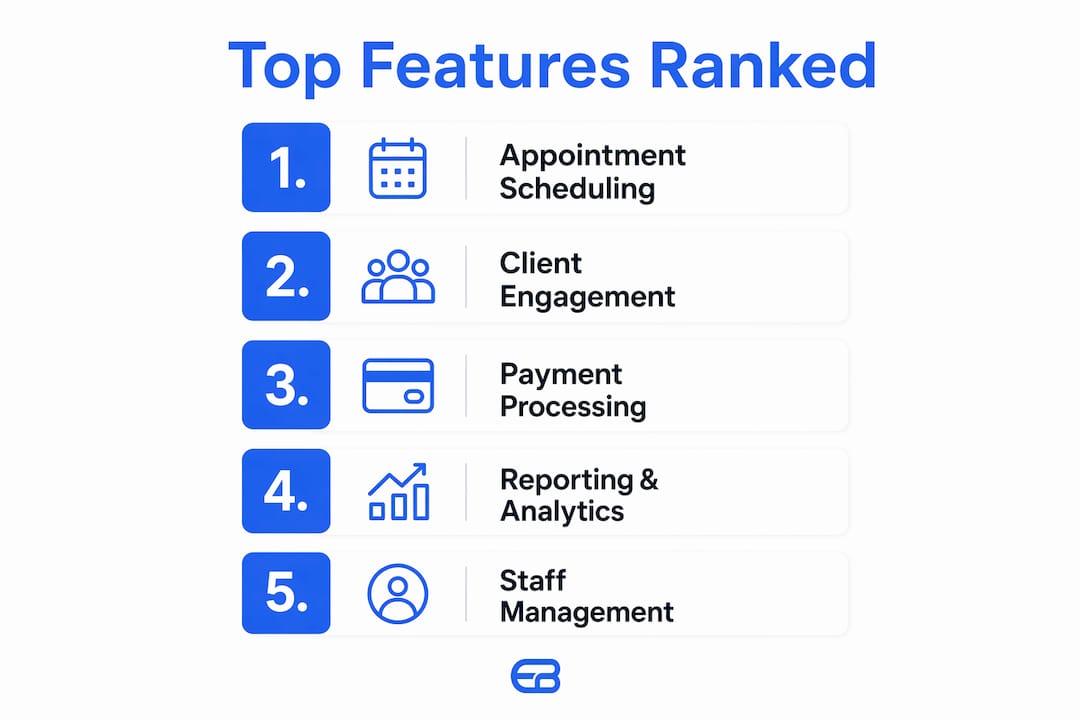
Mangomint earns its reputation on reporting clarity. Its interface is clean, its analytics are easy to read, and it does not bury key metrics behind multiple menus. Zenoti and Booker operate at a different scale entirely, with enterprise-grade reporting and multi-location dashboards suited to growing chains. For accounting integration, Expressbook’s direct sync with QuickBooks and Xero stands out: bookings, payments, and client data flow automatically, eliminating manual entry at month-end. Expressbook also includes AI-powered analytics and a dedicated mobile app for both owners and staff.
Pricing models
Most platforms use tiered subscription pricing based on location count, staff size, or feature access. Fresha is the exception with its free core plan. Expressbook has no subscription at all: salon owners buy prepaid credits and pay only for the time its voice assistant spends talking. SpaSalon Manager and Booker publish tiered plans but do not list public pricing on their main pages.
- Vagaro: tiered monthly plans, 30-day trial
- Boulevard: tiered by location and features
- Zenoti: enterprise pricing, custom quotes
- Fresha: free core plan, transaction fees on some features
- Expressbook: prepaid credits, no monthly fee
How to choose the right salon management platform for your business
Start with your current bottleneck. If missed appointments are costing you revenue, prioritize platforms with strong automated reminders, like Rosy or Expressbook. If your end-of-month accounting takes hours, focus on QuickBooks or Xero integration. If you run multiple locations, Zenoti or Booker are built for that complexity.
Key selection criteria:
- Business size: Solo practitioners fit Fresha or GlossGenius. Teams of 5–20 staff fit Vagaro, Rosy, or Mangomint. Multi-location operations fit Booker or Zenoti.
- Budget: Free plans exist (Fresha, Square Appointments free tier), but most full-featured platforms charge monthly. Trial periods range from 14 days to 3 months.
- Integration needs: If you use QuickBooks or Xero, confirm native sync before signing up. Expressbook and Vagaro both support this directly.
- Mobile access: Confirm whether the platform has a dedicated app for both clients and staff. Expressbook has a mobile app for owners and admins, not just a mobile-optimized website.
- Accessibility: Expressbook includes a voice agent that lets visually impaired clients book appointments and get answers about your business, a feature no other platform on this list currently offers.
- Scalability: Choose a platform that can grow with you. Switching software mid-growth is expensive in time and data migration.
Pro Tip: Before committing to any platform, contact their support team with a real question during your trial period. Response time and quality during the sales phase often predict what you will experience after you pay.
Demos and free trials are not just for testing features. They reveal how the software handles your actual workflow, your staff’s comfort level with the interface, and how quickly support responds when something breaks.
Why support quality can make or break your software investment
Technical downtime in a salon or spa is not an abstract problem. A booking system that goes offline during peak hours means lost appointments, frustrated clients, and staff unable to check schedules. Fast, live support is the difference between a 10-minute fix and a half-day disruption.
Live phone support with short response times is the gold standard. Kitomba, an Australian salon software provider, answers support calls in under 25 seconds on average, six days a week, with no bots. That benchmark illustrates what responsive support looks like in practice, even if Kitomba is not available in the US market. US-based salon owners should hold their software vendors to a similar standard.
What to look for in support quality:
- Live human phone support (not just email tickets or chatbots)
- Response times under a few minutes for urgent issues
- Support available during salon business hours, including weekends
- Onboarding assistance and training resources for new staff
- A knowledge base or video library for self-service troubleshooting
Among the platforms covered here, Vagaro and Boulevard offer live chat and phone support. Zenoti provides dedicated account support for enterprise clients. Expressbook includes live support as part of its offering. Fresha and GlossGenius lean more heavily on email and chat, which can slow resolution for urgent issues.
Booking software that reduces admin time also reduces the frequency of support calls, since less manual data entry means fewer errors to fix. The best platforms combine an interface that staff can learn quickly with support that resolves problems fast when they do arise.
How does salon software handle staff management?
Staff scheduling is one of the most time-consuming tasks in a salon or spa, and the right software turns it from a daily headache into a background process. The core need is simple: assign the right staff member to the right appointment, track hours, and avoid double-bookings. The execution varies widely across platforms.

Boulevard and Vagaro both offer staff-level scheduling with individual calendars, commission tracking, and performance reporting. Managers can see who is booked, who has gaps, and which staff members are driving the most revenue. Zenoti extends this into enterprise territory with payroll integration and multi-location staff management, useful for chains where staff rotate between locations.
SpaSalon Manager focuses specifically on daily operations control, with inventory and sales tracking tied to individual staff performance. Booker includes staff management tools designed for larger teams, with reporting that breaks down productivity by employee. Expressbook handles staff scheduling through its real-time availability system, preventing double-bookings automatically and giving admins a clear view of capacity across the day.
For spa and wellness centers, resource scheduling matters as much as staff scheduling. Treatment rooms, equipment, and therapist availability all need to align. Platforms like Zenoti and Boulevard account for this complexity; simpler tools like GlossGenius and Fresha do not.
What US salons need to know about data security and privacy
Salon and spa software handles sensitive data: client names, contact details, payment card information, and appointment history. US businesses face specific compliance obligations depending on their state and the type of data they process.
Payment data is the highest-risk category. Any platform processing credit cards must comply with PCI DSS (Payment Card Industry Data Security Standard). All major platforms on this list, including Vagaro, Square Appointments, Boulevard, and Expressbook, process payments through PCI-compliant infrastructure. Confirm this directly with any vendor before going live.
State-level privacy laws add another layer. California’s CPRA (California Privacy Rights Act) gives clients rights over their personal data, including the right to request deletion. Salons operating in California should confirm their software vendor has a data processing agreement and supports client data deletion requests. Similar laws are active or pending in Virginia, Colorado, and Texas.
Cloud-based platforms store data on remote servers, which means your client records are accessible from any device but also depend on the vendor’s security practices. Look for vendors that offer data encryption at rest and in transit, two-factor authentication for staff logins, and clear terms around data ownership. Expressbook publishes its terms and conditions covering data handling, which is a baseline transparency signal worth checking for any platform you evaluate.
What do user reviews actually reveal about these platforms?
User reviews across Capterra, G2, and Trustpilot consistently point to ease of use and interface clarity as the top factors in long-term adoption. Staff who find the software confusing revert to manual processes, which defeats the purpose of the investment.
Mangomint earns strong marks on Capterra and G2 for its clean interface and reporting depth. Users frequently cite how quickly new staff can learn the system. GlossGenius draws positive reviews on Capterra from independent stylists who value its visual design and fast payment processing, though some note that its feature set is narrower than full-service platforms.
Vagaro and Boulevard receive consistent praise for their breadth of features, with some users noting a steeper learning curve during initial setup. Fresha’s free model attracts strong sentiment from solo practitioners, though reviews mention that transaction fees on certain features can add up. Zenoti reviews reflect its enterprise positioning: powerful and configurable, but requiring dedicated onboarding time. Appointment apps that improve cash flow tend to earn the strongest long-term loyalty from owners, and that pattern holds across the platforms reviewed here.
The clearest signal in user reviews is this: software that reduces administrative work earns loyalty, and software that adds complexity loses it, regardless of how many features it offers.
Expressbook gives you a different path to the same goal
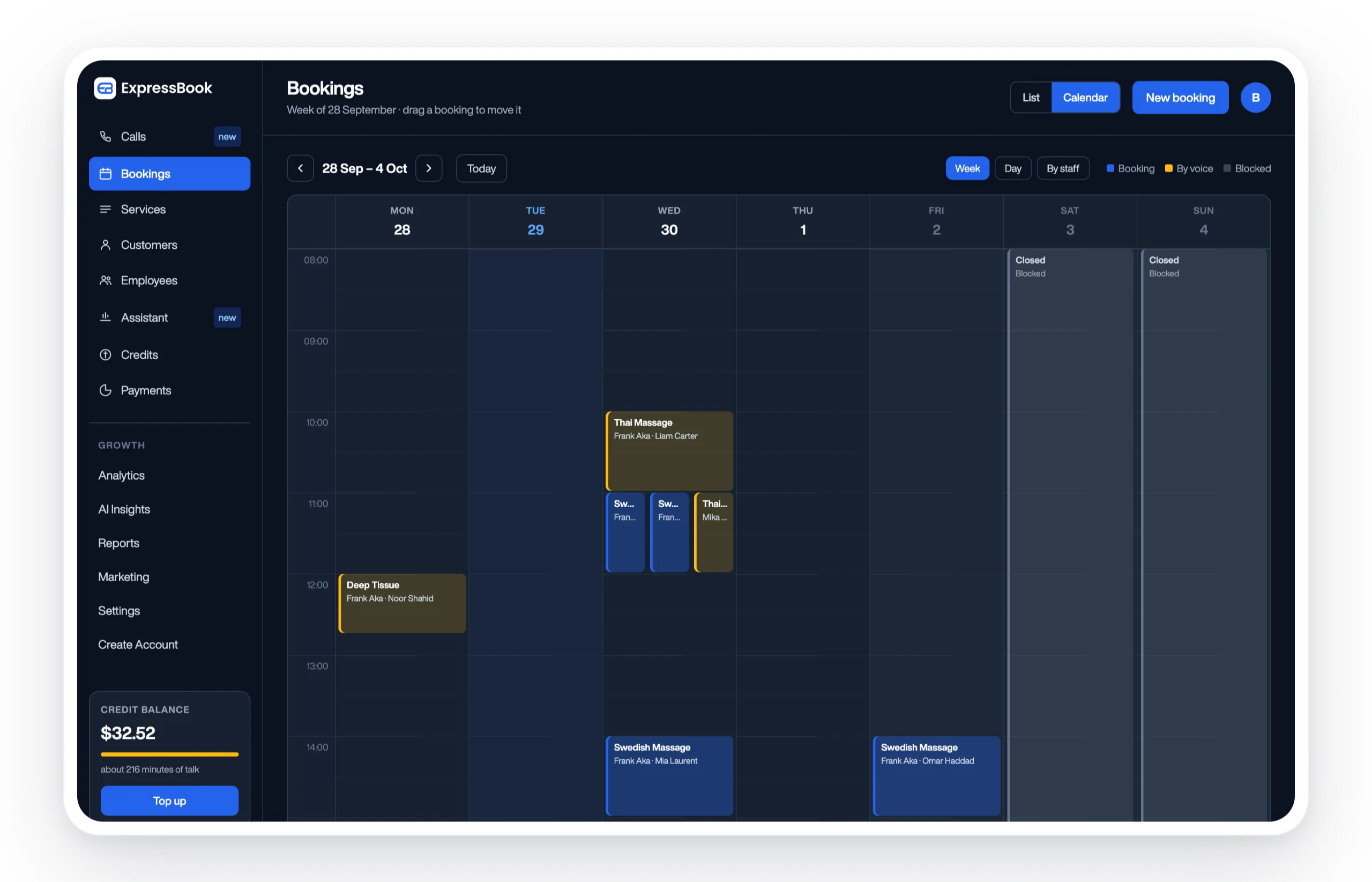
Every platform compared above solves a real problem. But if your priority is tight accounting integration, AI-powered analytics, and a real way to test the system without a subscription, Expressbook offers something most competitors do not. Its direct sync with QuickBooks and Xero eliminates the manual reconciliation that costs salon owners hours every month. The AI analytics surface booking patterns and revenue trends without requiring you to build custom reports.
Expressbook also includes a voice agent, the only platform on this list that lets visually impaired clients book appointments and ask questions about your business independently. The dedicated mobile app covers both client-facing booking and admin functions, so you can manage your schedule from anywhere. And with no subscription, a small credit top-up is enough to see whether it fits your workflow. For salon and spa owners who want accounting accuracy, accessibility, and analytics in one place, Expressbook is worth putting on your shortlist.
Key Takeaways
The best spa and salon management software matches your business size, integration requirements, and support expectations, not just your feature wishlist.
| Point | Details |
|---|---|
| Match software to business scale | Solo practitioners fit Fresha or GlossGenius; multi-location chains need Zenoti or Booker. |
| Prioritize accounting integration | Direct QuickBooks and Xero sync, as offered by Vagaro and Expressbook, eliminates manual month-end reconciliation. |
| Trial periods vary widely | Free trials elsewhere run from 14 days to a month; Expressbook has no subscription and runs on prepaid credits. |
| Support quality affects daily revenue | Live phone support with fast response times reduces downtime and protects bookings during peak hours. |
| Expressbook suits analytics-focused salons | Its AI analytics, voice agent, and QuickBooks/Xero sync make it the strongest fit for owners who need data and accessibility together. |