

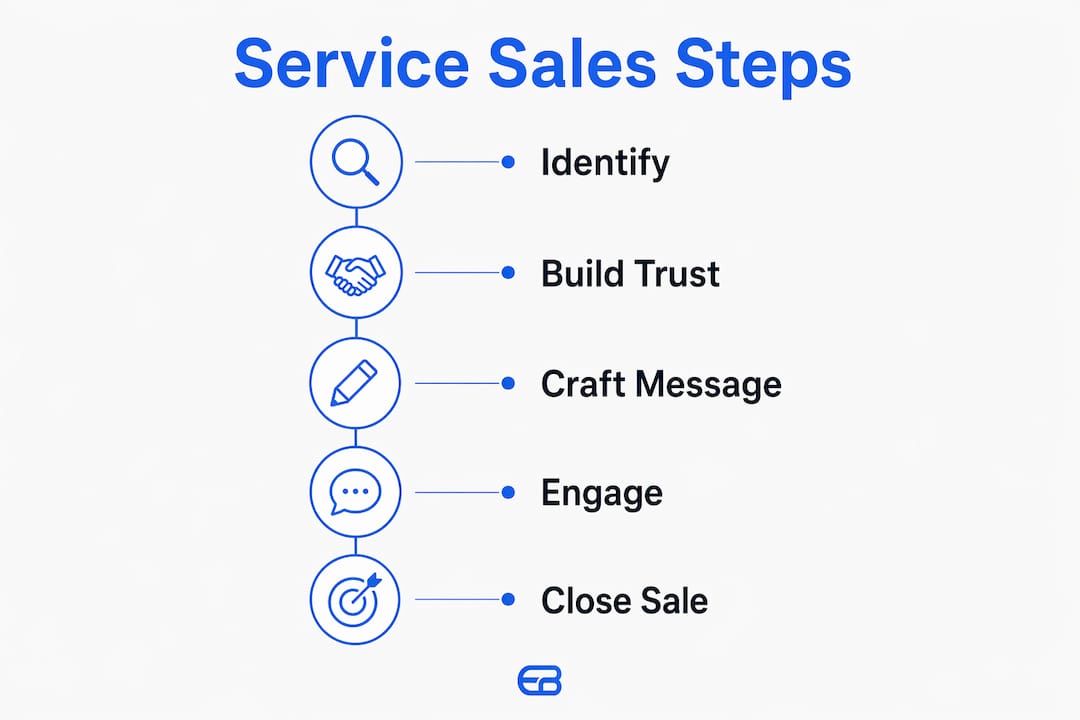
Selling your services effectively comes down to four fundamentals: defining who you serve, communicating the outcome you deliver, building trust before asking for a commitment, and making it easy for prospects to say yes. Service providers who master these four areas consistently win clients without resorting to pressure tactics or cold-call scripts.
Here is what that looks like in practice:
- Define your target audience with enough specificity that your messaging speaks directly to one type of client’s problem.
- Build a value proposition around the transformation you deliver, not the hours you bill or the tasks you complete.
- Establish proof through testimonials, case studies, and a polished Google Business Profile before spending on ads.
- Use consultative conversations to uncover client stakes, then present your offer as the logical solution.
- Simplify the path to booking with automated scheduling so prospects can commit the moment they are ready.
- Follow up consistently with value-driven touchpoints that keep you top of mind without feeling pushy.
- Build a sales pipeline over time so revenue stays steady rather than cycling between feast and famine.
The rest of this guide unpacks each of these steps with the depth and specificity you need to put them into practice.
What mindset do you need to sell services without being pushy?
The single biggest shift service providers need to make is this: stop thinking of sales as persuasion and start treating it as problem-solving. When you frame every conversation around what the client is trying to achieve, the dynamic changes entirely. You are no longer pitching. You are diagnosing.

Outcome-based selling makes this concrete. The best way to sell a service is to sell trust, expertise, and guaranteed outcomes rather than hours or technical features. Clients do not want to buy a 10-hour consulting package. They want the result that package produces, whether that is a functioning sales process, a booked-out schedule, or a compliant tax filing. Lead with the result, and the hours become irrelevant.
Understanding the client’s perspective also reduces sales resistance. When a prospect senses that you genuinely understand their situation, they lower their guard. That empathy is not a soft skill. It is a conversion mechanism. Ask about their current situation, what they have already tried, and what a successful outcome looks like to them before you say a word about your service.
Pro Tip: Narrow your target audience as specifically as you can. Targeted marketing that speaks to a precise client type feels magnetic rather than pushy, because the right people immediately recognize themselves in your message.
Expressbook supports this mindset by making the first step frictionless. When a prospect is ready to engage, a branded booking page with real-time availability lets them schedule a discovery call instantly, without back-and-forth emails that kill momentum.
How do you craft marketing messaging that actually attracts clients?
Clear marketing messaging answers four questions in sequence: who you serve, what problem you solve, what outcome you deliver, and why a prospect should trust you over anyone else. Miss any one of these and your message lands flat.

Building your core message
Start with the client’s situation, not your credentials. A financial advisor who leads with “15 years of experience” is talking about themselves. One who leads with “We help small business owners stop leaving money on the table at tax time” is talking about the client. The second version earns attention; the first earns a polite nod.
Proof is what closes the gap between interest and action. Testimonials with full names, case studies with specific results, and a steady stream of Google reviews all work together to lower the perceived risk of hiring you. Local Google Business Profile optimization and reviews are foundational for trust and ranking in local search, making them one of the highest-return investments a service business can make.
Choosing the right promotional channels
You do not need to be everywhere. You need to show up where your specific clients are already looking for help.
- Google Business Profile: Claim and fully complete your profile. Add photos, respond to every review, and post updates regularly. This is the single most cost-effective local visibility tool available to service providers.
- Search advertising: Someone searching “accountant near me” or “personal trainer downtown Chicago” has already decided they need help. Capturing that intent with a tight ad pointed at a focused landing page produces qualified leads faster than any other paid channel.
- Content marketing: Blog posts, checklists, and short videos that answer the questions your clients are already asking build authority over time. A long-form content strategy compounds in search rankings the way ads never can.
- LinkedIn: For B2B and professional services, consistent posting of useful insights and proof of results builds a warm audience that converts at a higher rate than cold outreach.
- Referral networks: Ask satisfied clients at the peak moment of their satisfaction, right after a successful milestone, not in a generic follow-up email. Make the introduction trivially easy by providing a one-sentence description of who you serve and a direct booking link.
Pro Tip: Align every channel’s message to the same core outcome statement. Inconsistency across your website, social profiles, and ads creates doubt. Consistency creates recognition, and recognition creates trust.
Expressbook integrates directly with your marketing by giving every ad, post, and email a single destination: a branded booking page where prospects can schedule without friction. That connection from awareness to appointment is where most service businesses lose leads.
How do you promote your services effectively in client conversations?
The discovery call is where service sales are won or lost. Effective discovery calls focus first on uncovering client stakes and needed outcomes rather than pitching prematurely. Ask what is at stake if the problem goes unsolved. Ask what success looks like in concrete terms. Then mirror those priorities back when you describe your offer.
During the conversation, address three layers of value:
- Practical value: What specific, measurable result does the client get? (“You will have a fully automated booking system running within two weeks.”)
- Emotional value: How will they feel once the problem is solved? Relief, confidence, and freedom from a recurring headache are powerful motivators.
- Monetary value: What does solving this problem save or earn them? Quantify it when you can, even roughly.
Proof points belong in the conversation, not just on your website. When a prospect expresses a specific concern, respond with a relevant case study or client result rather than a generic reassurance. “We worked with a physical therapy practice that was losing 12 appointments a week to scheduling errors. After six weeks with us, that number dropped to zero” is far more persuasive than “We have a lot of experience in healthcare.”
Objections are not rejections. They are requests for more information or reassurance. When a prospect says “I need to think about it,” ask what specific question is still unanswered. When they say “It’s too expensive,” ask what outcome they were hoping to achieve and what that outcome is worth to them. Reframing the conversation around value rather than price almost always opens a more productive dialogue.
Closing does not require pressure. A simple, direct question works: “Does this feel like the right fit for what you are trying to accomplish?” If the answer is yes, give them an immediate next step. Expressbook’s scheduling integration means you can send a booking link the moment the call ends, capturing commitment before the prospect’s attention moves elsewhere.
What operational processes make service selling easier?
The backend of your service business either supports sales or quietly sabotages them. Pricing confusion, slow responses, and complicated booking processes all create friction that costs you clients who were already interested.
Pricing models and transparency
Avoid hourly pricing wherever possible. Hourly rates invite comparison shopping and signal that you are selling time rather than outcomes. Package pricing tied to a specific deliverable or result is easier for clients to evaluate and commands higher fees. Common structures include:
- Project-based pricing: A fixed fee for a defined scope and outcome.
- Retainer pricing: A monthly fee for ongoing access, support, or a set volume of work.
- Tiered packages: Bronze, Silver, and Gold options that match different budget levels and scope requirements.
Be transparent about price. Clients who have to ask for a quote often do not bother. A published price range, even a broad one, reduces anxiety and filters out poor-fit prospects before they consume your time.
Booking, payment, and scheduling systems
Responding promptly to leads and simplifying the booking process increases conversion significantly in professional service sales. Sales often fail during the handoff from marketing to sales due to slow responses or complex scheduling. Automating that handoff removes the risk entirely.
Expressbook handles this end to end. Real-time availability management prevents double-bookings, automated reminders reduce no-shows, and payment processing integrates directly with QuickBooks and Xero so revenue tracking requires no manual entry. The platform’s online scheduling tools also improve the client experience by giving them control over when and how they book.
For payment models, consider requiring a deposit at booking to secure commitment. Milestone payments work well for longer projects. Full payment upfront suits lower-ticket or productized services. Whatever model you choose, build it into your booking flow so collection is automatic rather than a separate conversation.
Pro Tip: Speed is a competitive advantage. A prospect who submits an inquiry and receives an automated booking confirmation within minutes is far less likely to keep shopping. Expressbook’s mobile app lets you manage bookings and respond to clients from anywhere, so no lead sits unanswered.
How do you build a sales pipeline for consistent, long-term revenue?
Service sales rarely close on the first contact. Relationships need time, and trust needs evidence. Building your sales pipeline early with educational content and trust-building leads to more consistent service sales over time, precisely because you are already credible when a prospect is finally ready to buy.
A reliable pipeline rests on four pillars:
- Educational content: Whitepapers, checklists, short guides, and case studies that demonstrate your expertise before anyone asks for a proposal. This content does double duty: it ranks in search and it builds authority with prospects who are still in the research phase.
- Referral systematization: Ask at the right moment, make the introduction easy, and build partner relationships with adjacent professionals who serve the same clients for different needs. An accountant who refers to a bookkeeper, a web designer who refers to an SEO consultant. These relationships produce a steady trickle of warm leads for years.
- Consistent follow-up: Most opportunities need multiple touchpoints before a prospect decides. Follow up with something useful, an article, a relevant insight, a brief check-in, rather than a repeated pitch. B2B local SEO and content visibility keep you findable between those touchpoints.
- Analytics and tracking: Know which channels produce your best clients, which follow-up sequences convert, and where prospects drop off. Expressbook’s AI-powered analytics surface booking patterns and client engagement data that inform these decisions without requiring a separate CRM.
Expressbook’s automated reminders also support pipeline nurturing by keeping scheduled prospects engaged from the moment they book through their first appointment. The platform’s client retention tools reduce the gap between a prospect’s first contact and their first paid engagement.
The goal of pipeline building is simple: never be in a position where you need the next client urgently. Urgency is the enemy of good sales conversations. When your pipeline is full, you can afford to be selective, consultative, and patient, which paradoxically makes you more attractive to the clients you actually want.
Key Takeaways
Selling services effectively requires communicating clear outcomes, building trust before asking for commitment, and maintaining a consistent pipeline of prospects through education and follow-up.
| Point | Details |
|---|---|
| Lead with outcomes, not hours | Clients buy the result your service produces, not the time it takes to deliver it. |
| Narrow your audience | Specific, targeted messaging attracts the right clients and reduces the perception of pushiness. |
| Optimize your Google Business Profile | Local search visibility and reviews are foundational for trust and client acquisition in service businesses. |
| Automate the booking handoff | Prompt, frictionless scheduling converts interested prospects before they move on to the next option. |
| Build the pipeline before you need it | Educational content and referral systems create steady lead flow and prevent revenue gaps. |
Expressbook makes the operational side of service selling effortless
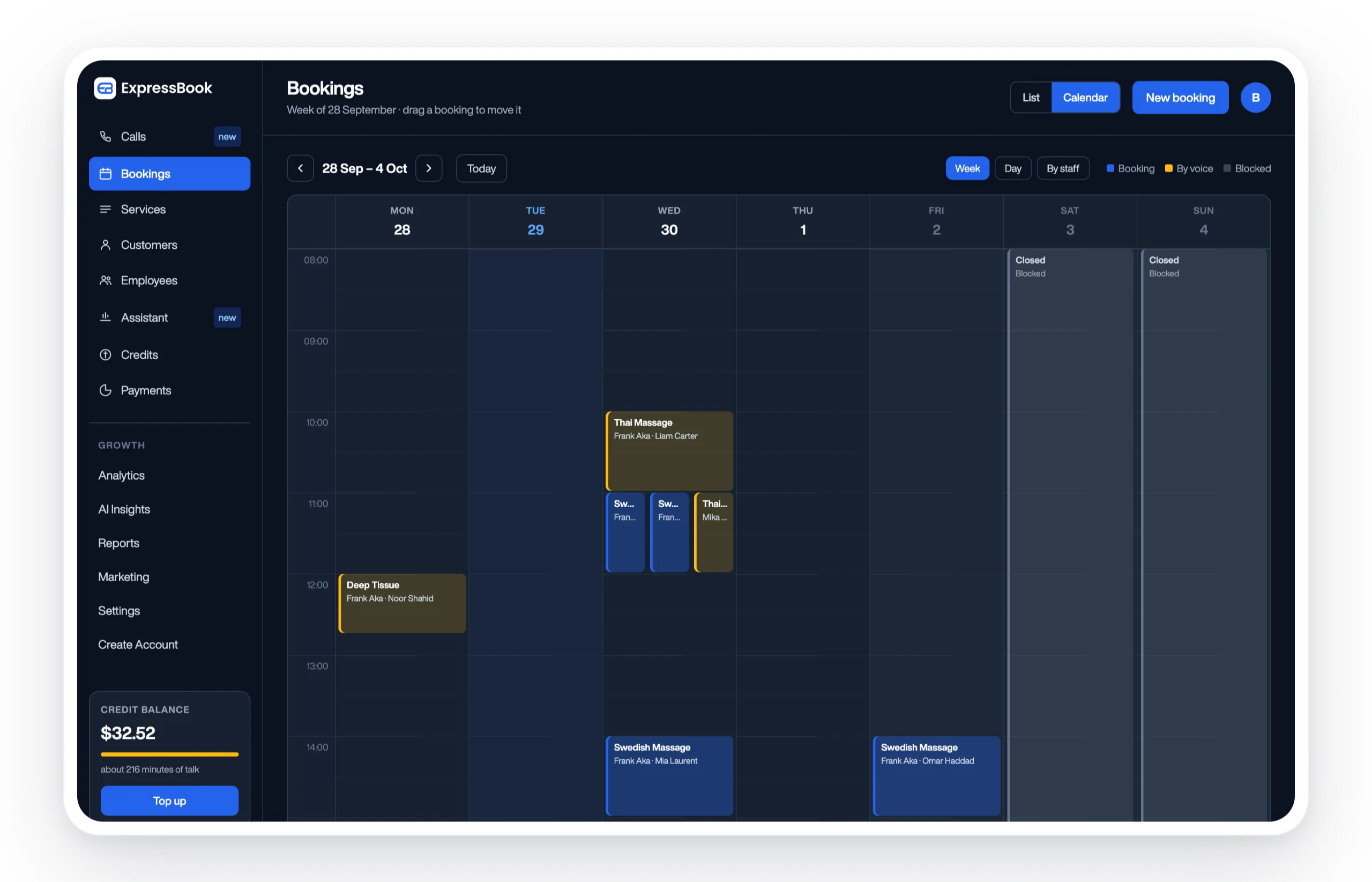
Every strategy in this guide depends on one thing: being ready when a prospect is ready. Expressbook gives service businesses the infrastructure to capture that moment every time. Branded booking pages, real-time availability, automated payment collection synced with QuickBooks and Xero, AI-powered analytics, and a dedicated mobile app for both clients and admins. The platform even includes a voice agent so visually impaired clients can book and get answers without barriers.
Service businesses that get more bookings without increasing marketing spend do so by converting the leads they already have, faster and with less friction. That is exactly what Expressbook is built for.
Top up a few credits and see how much time you reclaim when scheduling, payments, and client communication run on autopilot. Set up Expressbook today, there is no subscription.